Those Annoying Strips of Uncut Grass: Why Your Toro Is Leaving Them and How to Put It Right
Date Released: 1 May 2026 Category: Blog
There are few things more frustrating than finishing a full mowing session, stepping back to admire your work, and noticing long ribbons of uncut grass running across the lawn like someone forgot to colour them in. If this is happening to you, you're far from alone. It's one of the most common complaints during May and June, when grass is growing fast and the mower is being called into action regularly. The good news is that there are only a handful of reasons it happens, and most of them are straightforward to sort out.
Blunt blades don't cut grass cleanly. Instead of slicing through each blade of grass, they tear and batter it, which often means some stems get pushed aside rather than cut at all. The result is exactly those strips and patches of longer grass that you're seeing now.
If your lawn has also been looking a bit ragged or brown-tipped after cutting, that's another sign the blades need attention. Torn grass goes brown at the tips rather than showing a clean green edge, and once you know what to look for, it's easy to spot.
Blade sharpening or replacement is one of those jobs that makes an immediate, visible difference. If you're not comfortable doing it yourself, any local small engine workshop will sort it quickly and cheaply.
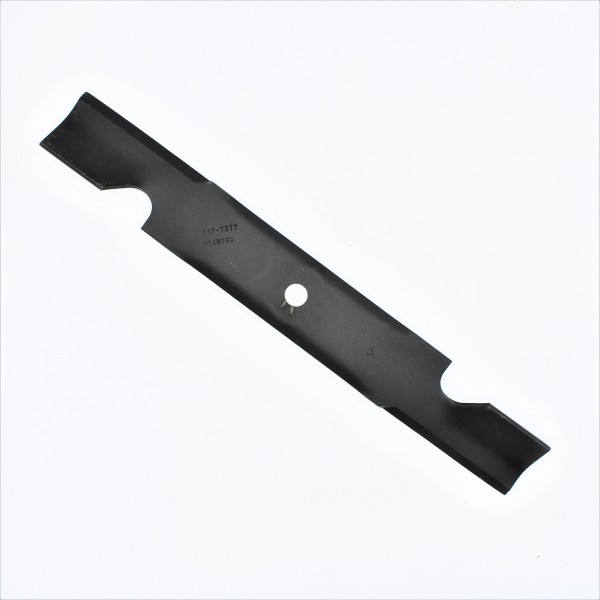
A bent blade really does need replacing rather than straightening. It's not an expensive part, but running with one for too long puts extra strain on the spindle and the whole cutting deck, so it's worth addressing promptly.
It sounds almost too simple, but adjusting your mowing pattern to include a small overlap on each pass can make the strips disappear entirely without touching the machine at all.
A blocked deck is one of the most overlooked causes of uneven cutting, and it's also one of the easiest to fix. Tipping the mower carefully to one side and clearing out the compacted grass underneath takes ten minutes and can transform the quality of the cut.
A worn spindle often makes a rumbling or humming noise, particularly when the blades are engaged, so if you've been hearing something like that alongside the patchy cutting, that's worth investigating.

None of this requires mechanical expertise. Most of it takes only a few minutes, and the difference to your lawn can be remarkable.
The important thing is not to just put up with it. Uneven cutting isn't just untidy; it can mean the mower is working harder than it needs to, and left unaddressed, some of these issues have a habit of developing into bigger ones.
A well-maintained Toro on a regular schedule should leave your lawn looking consistently tidy. With a little attention to the basics, those irritating strips should become a thing of the past.
Start With the Obvious: Your Blades
The blades on your Toro do an enormous amount of work over the course of a season, and they don't stay sharp forever. A blade that was cutting cleanly last summer may have spent the winter in the shed gradually losing its edge, or it may have picked up a knock or two that you never noticed at the time.Blunt blades don't cut grass cleanly. Instead of slicing through each blade of grass, they tear and batter it, which often means some stems get pushed aside rather than cut at all. The result is exactly those strips and patches of longer grass that you're seeing now.
If your lawn has also been looking a bit ragged or brown-tipped after cutting, that's another sign the blades need attention. Torn grass goes brown at the tips rather than showing a clean green edge, and once you know what to look for, it's easy to spot.
Blade sharpening or replacement is one of those jobs that makes an immediate, visible difference. If you're not comfortable doing it yourself, any local small engine workshop will sort it quickly and cheaply.
Could the Blade Be Bent?
A bent blade is a slightly different problem and worth checking separately. Even a small bend, perhaps from clipping a stone or a hidden root, can throw the blade off balance and cause it to miss sections of grass as it spins. You might also notice vibration through the handles or an unusual noise if this is the case.A bent blade really does need replacing rather than straightening. It's not an expensive part, but running with one for too long puts extra strain on the spindle and the whole cutting deck, so it's worth addressing promptly.
How You're Driving Matters More Than You Think
Sometimes the mower itself is completely fine and the issue is simply technique. When mowing, each pass should overlap slightly with the previous one, usually by a few inches. If you're driving in straight lines with no overlap at all, it's very easy to leave a thin strip between passes that never actually goes under the deck.It sounds almost too simple, but adjusting your mowing pattern to include a small overlap on each pass can make the strips disappear entirely without touching the machine at all.
The Deck Itself
If the blades are fine and your technique is sound, it's worth having a look at the cutting deck. The deck is the housing that sits over the blades and helps direct airflow to lift the grass before it's cut. If the deck is clogged with old grass clippings underneath, that airflow is disrupted, and the grass may not stand up properly before the blade reaches it.A blocked deck is one of the most overlooked causes of uneven cutting, and it's also one of the easiest to fix. Tipping the mower carefully to one side and clearing out the compacted grass underneath takes ten minutes and can transform the quality of the cut.
Spindle Wear
If you've checked everything else and the problem persists, it may be worth looking at the blade spindle. This is the component that holds the blade and allows it to spin, and over time the bearings inside it can wear. When a spindle bearing starts to go, the blade can wobble slightly as it turns, which causes inconsistent cutting across the width of the deck.A worn spindle often makes a rumbling or humming noise, particularly when the blades are engaged, so if you've been hearing something like that alongside the patchy cutting, that's worth investigating.
A Quick Checklist Before Your Next Cut
Before you head out for your next mow, it's worth running through a few quick checks. Look at the blades for obvious damage or dullness. Clear any grass buildup from under the deck. Check that the cutting height is set evenly on both sides of the machine, as an uneven deck will always produce an uneven cut. And remind yourself to overlap each pass slightly as you go.None of this requires mechanical expertise. Most of it takes only a few minutes, and the difference to your lawn can be remarkable.
When to Seek Help
If you've worked through all of the above and the problem is still there, it may be time to have the machine looked at by someone who can inspect the spindle, check the deck level properly, and assess the blades with fresh eyes. A good local dealer or workshop will usually be able to diagnose the issue quickly.The important thing is not to just put up with it. Uneven cutting isn't just untidy; it can mean the mower is working harder than it needs to, and left unaddressed, some of these issues have a habit of developing into bigger ones.
A well-maintained Toro on a regular schedule should leave your lawn looking consistently tidy. With a little attention to the basics, those irritating strips should become a thing of the past.